Is the water cooler chat dead? Or do we just need to embrace the virtual water cooler?
A reason which comes up often centres on the loss of in-person, informal communication time for teams. Brief catchups, bits of small talk whilst making the morning coffee, just general spontaneous time that happens when groups of workers spend their days together. The phrase most often used to describe this is ‘water cooler chat/conversation’. For many of us older folk, this phrase will ring familiar, but not everyone will know it, particularly those of the younger generation who may only have entered the workplace during or after the pandemic.
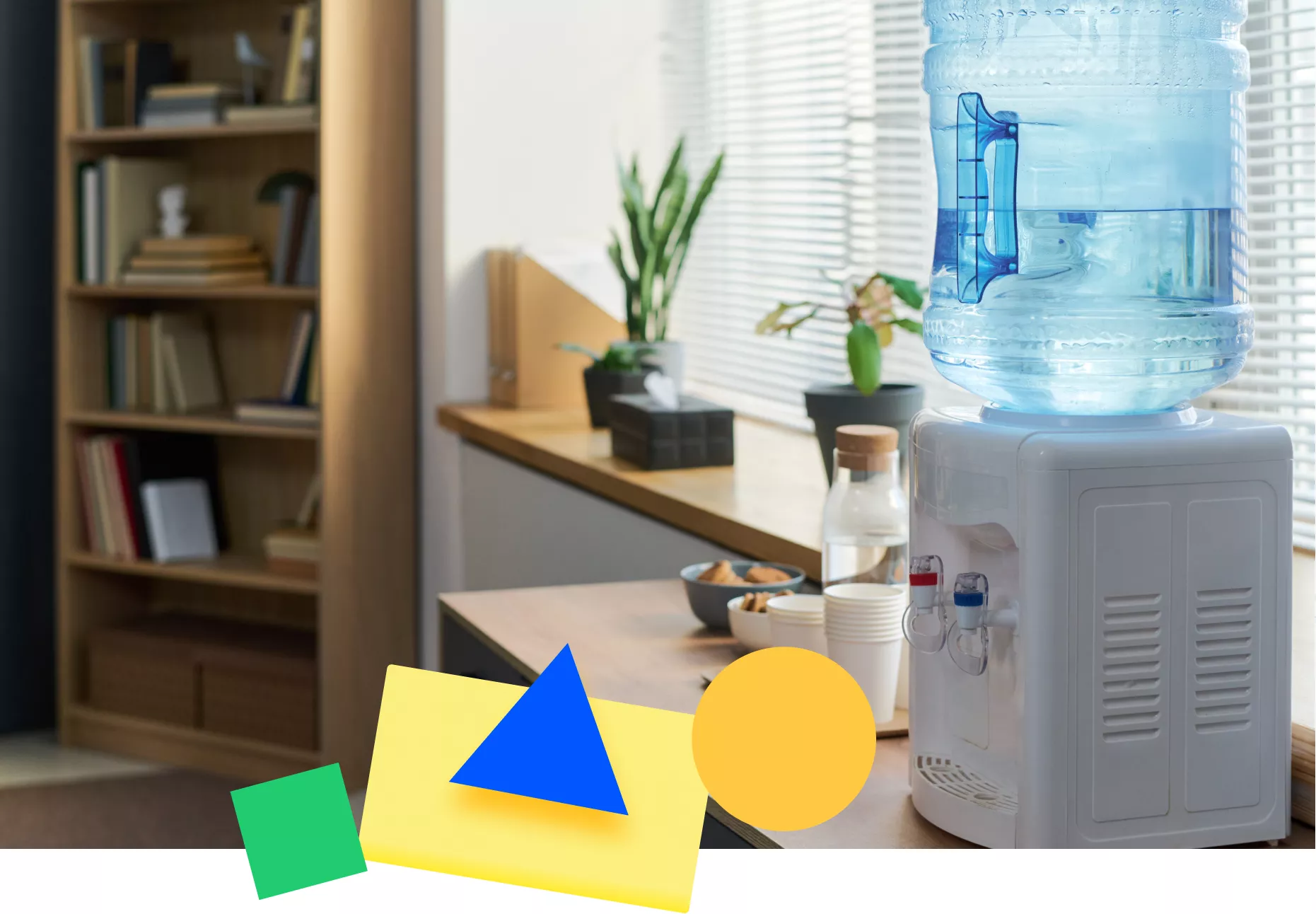
Water cooler chat doesn’t actually need a water cooler, but it originates from a time when water coolers were present in offices as a physical point for people to pass the time at whilst getting a drink. Other appliances are available – popular hangouts include the photocopier, the tiny office kitchen, and the reception area comfy chairs.
But it isn’t about the location, it’s about what happens there.
Water cooler chat refers to casual, informal and unplanned conversations that take place between colleagues throughout the day. Mostly these are spontaneous, they happen at natural pauses– e.g. when people are making a coffee or having a comfort break – and they usually relate to non-work chat. Topics can be about anything from pets to weekend plans, to how last night’s date went, to how family members are, etc.
The water cooler gives people a chance to have a break and ‘reset’ from work, before they continue.
Where do we start? The positive effects of water cooler chats run right through the organisation. The very nature of spontaneous conversation encourages people to speak in a more relaxed way than they might in a formal meeting. This can help teams get to know one another, build up professional friendships, and build a positive culture in the organisation.
Stronger relationships bring about a trusting ethos and encourage employee engagement. If teams feel they have the autonomy to take informal breaks and to chat with their colleagues at impromptu moments, they will feel valued and trusted. Water cooler chats break down silos that can form within companies as they encourage different departments to connect and share ideas. This all has a positive effect on staff retention and productivity, as colleagues across the organisation work better together.
Although these moments are largely not based around work, they are opportunities for snippets of work conversation to trickle in, e.g. to query something informally or to pass on an idea they’ve had. All of this contributes to a culture where people feel psychologically safe, and this creates the perfect space for innovation to thrive.
Some worry that water cooler chat has become extinct, others are happy if it has. For there are managers who consider it a damaging thing to businesses. They view these chats on a surface-level basis and see them as distractions that waste time and hinder productivity. In reality, the opposite is true, as we’ve outlined above. Rather than wasting time, these moments allow for staff to pause, have a breather, and grow working relationships in the process.
And some worry about water cooler conversations becoming exclusive to only a few colleagues in the way a clique might form, and then this can develop into a place for rumours to be spread and negative messages to flourish. This is easily mitigated with the right protocols in place and by having an open and transparent communication system, which makes it harder for rumours to begin.

You’d be forgiven for thinking that hybrid working meant the death of the water cooler chat. After all, how can you do this when everyone is spread out? Well, the answer is, pretty easily.
With hybrid working increasing the risk of isolation and loneliness in workers, the water cooler chat is arguably more important than ever before, both as part of a wider communications and workplace management strategy, and on its own as the glue that keeps teams together on a social basis.
Thankfully, there are many ways to replicate the water cooler in hybrid land, even if it doesn’t look quite the same as before. In fact, there are opportunities for improvements.
Firstly, don’t forget that hybrid workplaces include remote working and office working, so your offices can still have water cooler conversations with those who are present.
But how do we create a virtual water cooler?
Your approach will depend on the size and set-up of your organisation. Here are some tips.

Although the USP of water cooler conversations is their informality and spontaneity, there has to be a certain amount of planning in order for this to work virtually. It doesn’t have to be anything heavy, but it should be recognised as part of your staff coordination, and your hybrid communications strategy so that everyone knows how to access it.
Whilst not necessarily spontaneous, virtual team activities help bring teams together and connect when they’re working remotely. Much of what we do offline, we can replicate online. Think virtual book clubs, think virtual happy hour, weekly quizzes, even adding in informal time and ice-breakers to team meetings.
It’s likely you will already be using some sort of company-wide intranet or software to keep connected, and you maybe able to use this for virtual water cooler moments too. For example, you could have a Virtual Common Room in Teams.
An alternative is to use social intranet programmes, which are specifically designed for this purpose. There are a number of these available, including Workvivo, SharePoint, MyHub, Simpplr, Jivo, Happeo, and Haiilo.
Whilst you might not want a formal policy, it’s wise to have some guidelines for water cooler chats. These can cover appropriate use of language, what to do if the chat turns negative, and how to prioritise inclusivity – and actually virtual water coolers can be more inclusive places as they are intended to include everyone, not just those passing by on their coffee break.
Hybrid working doesn’t spell the end of water cooler moments, far from it. It is an opportunity to keep informal and flexible communication going.
For more insights and articles about work and hybrid working from Team Today, visit our blog here.
